
Dog Separation Anxiety: Why It Happens and How to Help
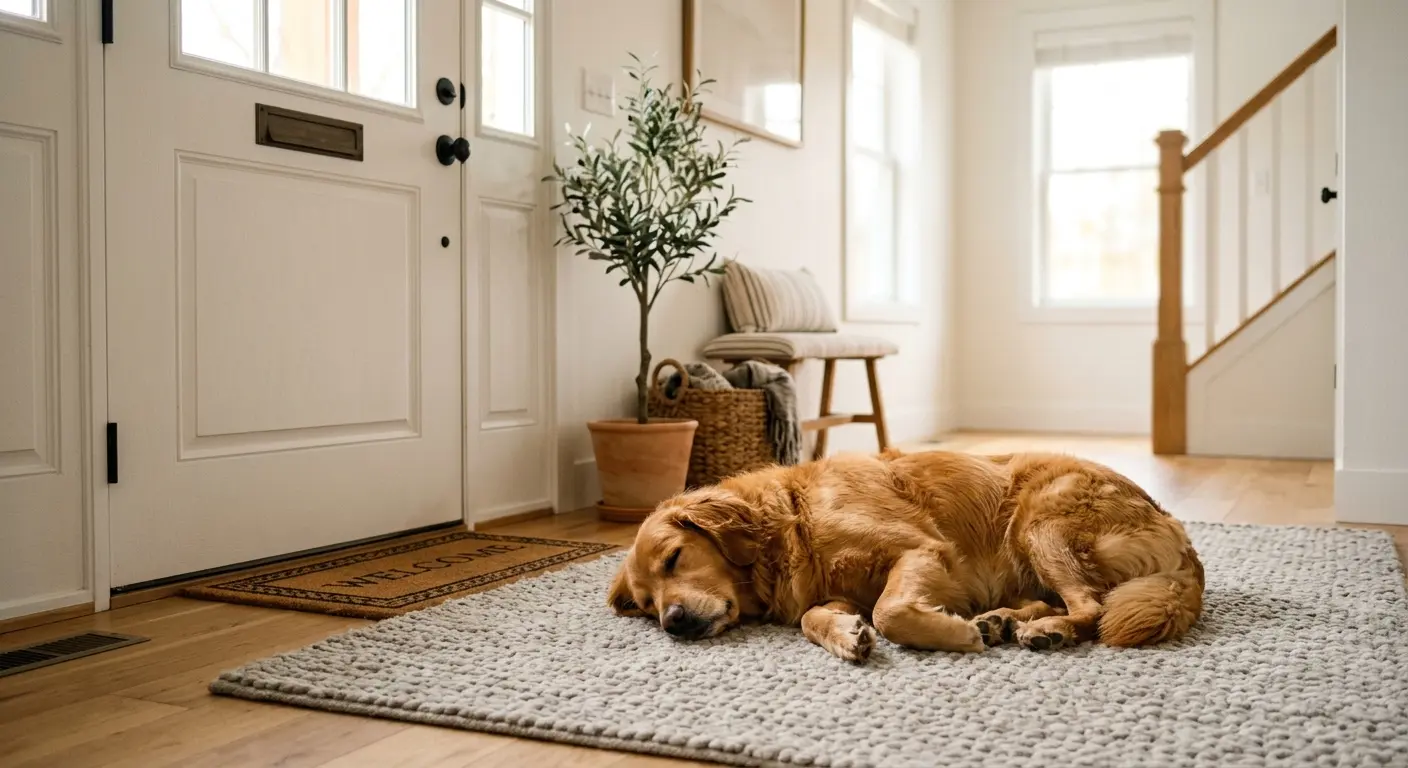
You close the front door, and before you’ve even reached the car the barking starts. You come home to a chewed door frame, a puddle by the mat, or a worried note from a neighbor. If your dog seems to fall apart the moment they’re alone, it’s genuinely distressing — for both of you. The good news: separation anxiety is one of the most understood behavior problems there is, and with a calm, force-free approach most dogs can learn that being alone is nothing to fear.
What is separation anxiety, really?
Separation anxiety is panic — a genuine fear response that switches on when your dog is left alone or separated from the person they’re bonded to. It isn’t spite, stubbornness, or your dog “punishing” you for leaving. A dog in this state is having something close to a panic attack, and the destruction or noise is what that panic looks like from the outside.
That distinction matters, because a frightened dog cannot be trained out of fear with discipline. The goal isn’t to stop the behavior — it’s to remove the fear underneath it. Once your dog feels safe alone, the barking, chewing, and accidents fade on their own.
Is it really anxiety — or just boredom?
Not every mess or bark means panic. Plenty of “home alone” problems are actually boredom, under-exercise, or a puppy who simply hasn’t learned the rules yet — and those have very different fixes. Here’s how they tend to differ:
| Looks like separation anxiety | Looks more like boredom |
|---|---|
| Distress starts as you prepare to leave (keys, shoes, coat) | Dog is relaxed until they run out of things to do |
| Panic in the first few minutes after you go | Chewing or mischief spread randomly through the day |
| Follows you room to room; can’t settle when alone | Happy to nap in another room while you’re home |
| Targets exits — scratching at doors and windows | Targets fun stuff — shoes, trash, the couch |
| Accidents even in a fully house-trained dog | Accidents mostly when left far too long |
| Doesn’t eat or touch a stuffed toy while you’re gone | Happily works on a chew once given one |
The single most telling clue is timing. Separation-anxiety distress almost always hits within the first 15–30 minutes. If you can, set up a phone or camera and watch what your dog actually does after you leave — it’s the fastest way to know what you’re dealing with.
Common signs to watch for
- Vocalizing — barking, howling, or whining that starts soon after you leave.
- Destruction, especially around doors, windows, and the spots where you exit.
- Pacing or restlessness, often in a fixed pattern.
- House-training “accidents” in an otherwise reliable dog.
- Drooling, panting, or trembling while alone.
- Refusing food — ignoring even a favorite chew until you’re back.
- Over-the-top greetings — frantic, prolonged excitement when you return.
- Trying to escape, sometimes to the point of injuring paws or teeth.
What NOT to do
Some instinctive responses make separation anxiety worse. Skip these:
- Don’t punish. Coming home to damage is frustrating, but scolding a panicked dog adds fear and teaches nothing — your dog can’t connect it to something that happened hours ago.
- Don’t get another dog “for company.” Separation anxiety is usually about you specifically. A second dog often just becomes a second anxious dog.
- Don’t flood them. Leaving an anxious dog alone for hours to “get used to it” confirms their worst fear and can set you back badly.
- Don’t make comings and goings dramatic. Long, emotional goodbyes and hellos raise the stakes around your departure.
The real fix: teaching “alone” is safe
The proven, force-free approach is gradual desensitization — building your dog’s tolerance for being alone in steps small enough that they never tip into panic. It takes patience, but it’s the closest thing to a lasting fix.
- Defuse your departure cues. Your dog has learned that keys, shoes, and coat predict abandonment. Pick these things up at random times and don’t leave — grab your keys and sit down, put your coat on and make tea. Repeated enough, these cues stop triggering dread.
- Start with seconds, not minutes. Step outside, close the door, and come right back in before your dog gets worried. The whole point is to end every rep while they’re still calm.
- Build up slowly. Extend the time away only as fast as your dog stays relaxed — a few seconds, then longer, then a minute. If a step triggers stress, you’ve gone too far; drop back to an easier one.
- Keep arrivals and departures boring. Leave and return with no fuss. Calm and low-key teaches your dog that your going is a total non-event.
- Stay under threshold. The golden rule: your dog should never be pushed to the point of panic during training. Every calm rep builds confidence; every panicked one sets you back.
Progress isn’t a straight line, and rushing is the most common mistake. Slow really is fast here.
Manage the meantime
Desensitization only works if your dog isn’t also being left to panic in real life. While you train, avoid leaving them alone longer than they can currently handle. That might mean a dog sitter, daycare, a trusted neighbor, or bringing your dog along when you can. Every full-blown panic episode undoes training, so protecting your dog from them is part of the plan, not a detour.
Tools that can help
None of these fix separation anxiety alone, but they can take the edge off while you do the real work:
- Enrichment — a stuffed food toy or lick mat can build a positive association with your departure (for milder cases; a severely anxious dog won’t touch it).
- A safe space — a comfortable, dog-chosen spot rather than a locked crate, which can worsen panic in some dogs.
- Calming aids — pheromone diffusers, calm background sound or music, and pressure wraps help some dogs relax.
- Plenty of exercise and sniffing before alone time — a tired, satisfied dog settles more easily.
When to get professional help
If your dog’s anxiety is severe — self-injury, escape attempts, non-stop panic — or it isn’t improving, please reach out. Start with your vet: they can rule out medical causes and, for many dogs, anti-anxiety medication is the thing that finally makes desensitization possible. A certified, force-free behaviorist can then build a plan tailored to your dog. Asking for help isn’t failing your dog — for real separation anxiety, it’s often the kindest and fastest route to relief.
Help your dog feel safe with Ruffy
Confidence being alone is built in tiny, calm steps — exactly the kind of practice that’s easy to skip when life is busy. Inside the Ruffy app, you’ll find force-free lessons on separation anxiety, building confidence, and calm behavior, alongside courses on the everyday skills that make life easier for both of you — all in just a few minutes a day.
Download Ruffy free and start helping your dog feel safe alone, one calm session at a time. 🐾
Keep reading
Why Does My Dog Bark and Lunge at Other Dogs on Walks?
Leash reactivity explained: why some dogs bark, lunge and pull at other dogs on lead, what makes it worse, and a calm, force-free plan to help them cope.
Why Is My Dog Scared of Fireworks? (And How to Help)
Why fireworks terrify so many dogs — and what actually helps. A calm, force-free guide to preparing your home, soothing your dog in the moment, and easing the fear long term.
How to Stop a Dog Chewing Everything (Force-Free)
Chewed shoes, table legs and TV remotes? Destructive chewing is normal dog behavior with a fixable cause. Why dogs chew, how to redirect it, and why punishment backfires.