
How to Stop a Puppy From Biting (Without Punishment)
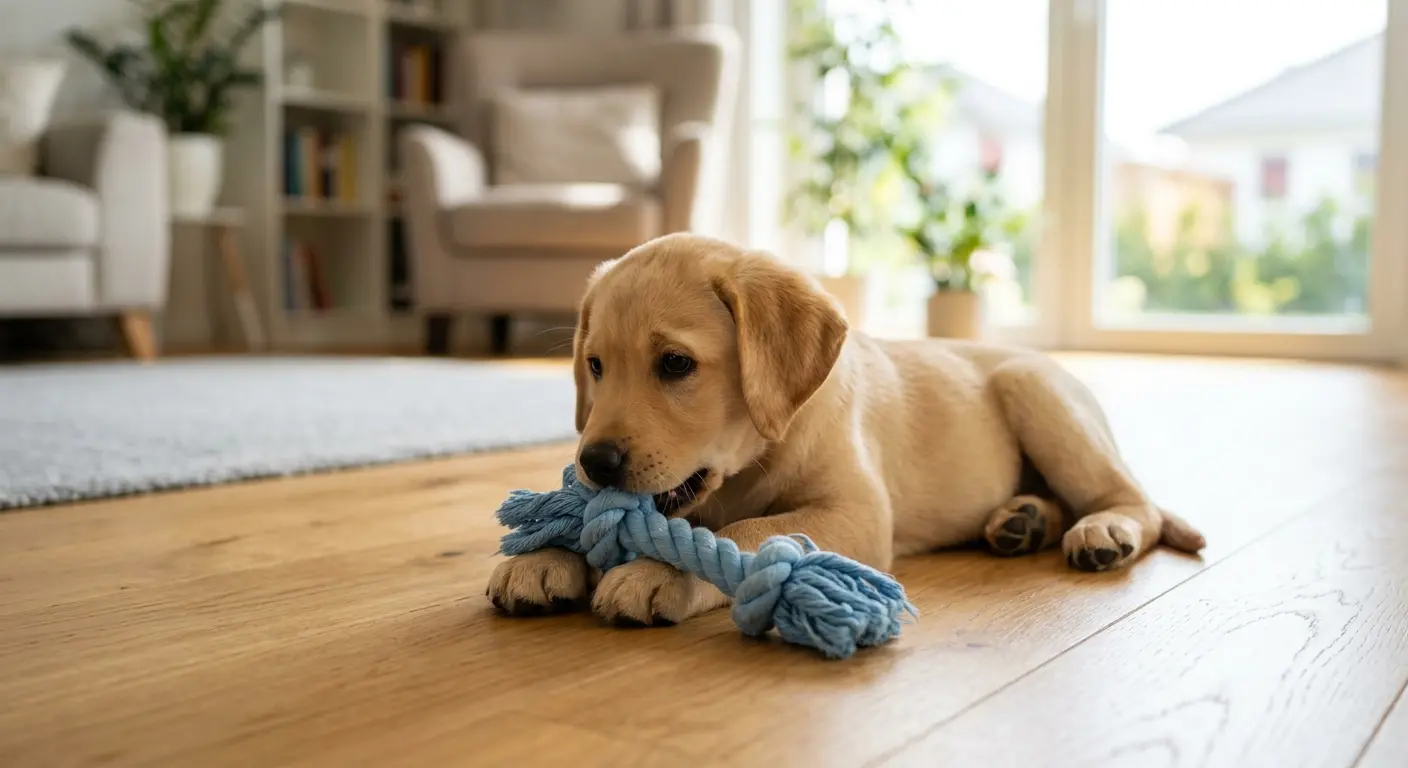
Those tiny teeth are astonishingly sharp — and if your puppy is sinking them into your hands, sleeves, and ankles, you’re probably wondering what you’re doing wrong. The short answer: nothing. Puppy biting is one of the most normal things a young dog does. It isn’t aggression, and it isn’t a sign of a “bad” puppy. But normal doesn’t mean you have to put up with it — you can absolutely teach your puppy to be gentle, using a calm, force-free approach and a bit of consistency.
Why do puppies bite so much?
Biting and mouthing is how puppies explore the world and learn about their own bodies. There’s almost always a simple reason behind it:
| What’s going on | What it looks like | What it means |
|---|---|---|
| Play | Nipping at hands during games, grabbing sleeves | Totally normal — it’s how puppies play with littermates |
| Teething | Gnawing on everything, extra mouthy, sometimes drooly | Sore gums; usually peaks around 3–6 months |
| Exploration | Mouthing new objects, testing textures | Puppies “see” the world with their mouths |
| Overtiredness | Frantic, wild biting, hard to settle | An overtired puppy, like a cranky toddler, loses control |
| Overexcitement | Ramping up during play until it’s all teeth | The arousal boils over and the brakes come off |
| Herding instinct | Nipping at heels and ankles, especially when you move | Common in herding breeds — an instinct, not defiance |
Spotting why your puppy is biting tells you how to respond. A teething puppy needs something appropriate to chew; an overtired one needs a nap, not a training drill.
The real goal: bite inhibition
Here’s the single most important idea in this whole topic. Your first goal isn’t to stop all mouthing overnight — it’s to teach bite inhibition: the ability to control the force of a bite.
Puppies learn this naturally from their littermates. When one pup bites too hard during play, the other yelps and stops playing. The biter quickly learns that hard bites end the fun, so they start to bite more softly. When a puppy leaves the litter too early, they miss some of this lesson — and it’s now your job to continue it.
This is why the approach below focuses first on teaching “gentle,” then on redirecting to appropriate outlets, rather than punishing the bite. A dog with good bite inhibition is a genuinely safer dog for life.
What to do the moment your puppy bites
Consistency matters more than any single technique. Pick an approach and make sure everyone in the house does the same thing every time.
- Mark it and pause. The instant teeth touch skin, give a calm, quiet “ouch” or “oops” and stop moving. You’re mimicking what a littermate would do. Loud, dramatic yelps can actually excite some puppies, so keep it low-key.
- Redirect to a toy. Have a chew or tug toy within reach and offer it the moment those teeth come out. This teaches your puppy what to bite instead of just not to bite you. Keep toys stashed in every room.
- Reward gentle mouths. When your puppy licks or takes a treat softly, calmly praise them. You’re building the habit you want, not just interrupting the one you don’t.
- Use a brief time-out. If the biting keeps coming, calmly stand up and step away (or leave the room) for 10–20 seconds. The lesson: teeth on skin means the fun ends. Then quietly return and try again — no scolding.
- Meet the underlying need. If it’s clearly teething, offer a frozen chew or damp frozen washcloth to soothe sore gums. If your puppy is wild and frantic, it’s almost certainly nap time.
What not to do
Some old-school advice actively makes biting worse and can damage your puppy’s trust. Skip all of it:
- Don’t punish physically. Never smack, hold the muzzle shut, pin your puppy down, or “alpha roll” them. These frighten your puppy, can cause real fear-based aggression, and teach them that hands are scary.
- Don’t yell. Shouting adds excitement or fear, neither of which helps.
- Don’t play rough with your hands. Wrestling or letting your puppy chase and bite your fingers sends a mixed message. Use toys as the target instead.
- Don’t pull away fast. Jerking your hand back looks like a tug game and triggers the chase instinct. Go still instead.
Puppy nipping vs. real aggression Normal puppy biting comes with a loose, wiggly body and a playful mood. Growling with a stiff body, a hard stare, snapping when touched near food or while resting, or biting that seems driven by fear are different — if you see those, loop in your vet or a certified, force-free trainer or behaviorist rather than working through it alone.
Set your puppy up to succeed
The best way to reduce biting is to prevent the states that fuel it. Manage the day and the mouthy moments shrink on their own.
- Protect naps. Puppies need a lot of sleep — often 16–18 hours a day. Much “bad” biting is simply an overtired puppy who can’t self-settle. Build in regular quiet time in a crate or pen.
- Drain energy the right way. Sniffing walks, gentle play, and short training games burn mental and physical energy so your puppy isn’t bouncing off the walls.
- Keep chews on rotation. Provide a variety of safe, appropriate chew toys — including frozen ones during teething — so there’s always a legal outlet for the urge to bite.
- End play before it tips over. Learn your puppy’s “too much” signal and wind games down before they hit the overexcited, all-teeth stage.
Most puppies grow out of the worst of the biting once their adult teeth are in, usually by around six or seven months — especially when you’ve consistently taught them a gentler way.
Teach a gentle mouth with Ruffy
Puppy biting is a phase, but the habits you build now last a lifetime. Inside the Ruffy app, you’ll find force-free, step-by-step lessons on bite inhibition, teething, and impulse control — alongside all the early skills that set your puppy up for a calm, confident life, in just a few minutes a day.
Download Ruffy free and turn those needle teeth into gentle manners, one short session at a time. 🐾
Keep reading
Why Does My Dog Bark and Lunge at Other Dogs on Walks?
Leash reactivity explained: why some dogs bark, lunge and pull at other dogs on lead, what makes it worse, and a calm, force-free plan to help them cope.
How to Stop a Dog Chewing Everything (Force-Free)
Chewed shoes, table legs and TV remotes? Destructive chewing is normal dog behavior with a fixable cause. Why dogs chew, how to redirect it, and why punishment backfires.
Why Does My Dog Eat Poop? (And How to Stop It, Kindly)
It's gross, but it's common and rarely a sign of something sinister. Here's what the science says about why dogs eat poop — their own, the cat's, or a horse's — plus the vet checks worth doing and the force-free way to stop it.