
Why Does My Dog Eat Poop? (And How to Stop It, Kindly)
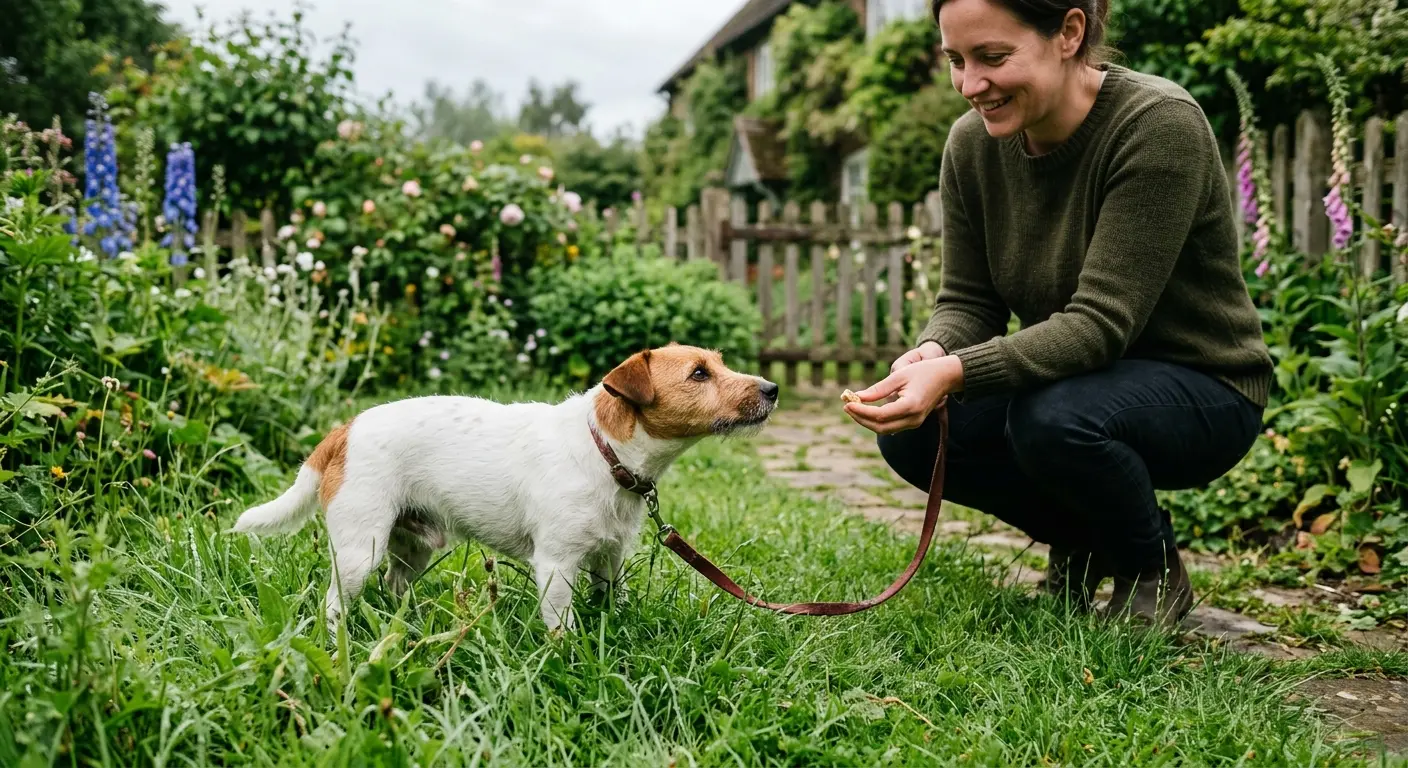
Few things make an owner recoil like watching their dog tuck into a pile of poop and then try to lick their face. So let’s get the reassuring part out of the way first: eating poop — the technical name is coprophagia — is common, usually not a medical emergency, and almost never a sign of a “bad” dog. It’s a normal-if-revolting behavior with a handful of ordinary explanations, and in most cases you can reduce it a lot.
That said, “usually harmless” isn’t “always harmless.” A dog who suddenly starts eating stool, or who’s wolfing it down alongside other changes, deserves a vet’s eye. Let’s sort the everyday reasons from the ones worth checking.
First, which kind of poop-eating is this?
It matters more than people realize, because the causes are different:
| What they’re eating | Usually about |
|---|---|
| Their own stool | Behavior, habit, or (sometimes) diet/absorption |
| Another dog’s stool | Behavior, scavenging, or attraction to that dog’s diet |
| Cat litter-box “treats” | Taste — cat food is high in protein, so the output is appealing |
| Horse, rabbit, or deer droppings | Taste and scent; herbivore droppings are a classic dog delicacy |
A dog raiding the cat’s litter tray or hoovering rabbit droppings on a walk is doing something a bit different from a dog eating its own poop in the garden. The management is similar; the why is not.
The normal, non-medical reasons
For a healthy adult dog, coprophagia is usually behavioral or instinctive rather than a sign of illness:
- Puppies explore with their mouths. Much like they mouth shoes and table legs, young puppies investigate poop by tasting it. Most simply grow out of it.
- It’s in the maternal blueprint. Mother dogs instinctively clean up after their litter by eating the puppies’ waste to keep the den clean — a normal, hard-wired behavior, not a disorder.
- Ancestral hygiene. Research from UC Davis on why dogs eat stool suggests a plausible evolutionary root: eating fresh feces from the resting area may have helped ancestral dogs clear it before parasite eggs became infectious. In that light, a dog eating fresh poop is following a very old script.
- It tastes good to them (sorry). Undigested nutrients, especially in the stool of cats or herbivores, make it genuinely appealing to a scavenger’s palate.
- Boredom, or a bored dog’s job. An under-stimulated dog in an empty yard will find its own entertainment — and this can become one.
- Stress or anxiety, including in dogs kept confined for long stretches.
- It got a reaction once. If eating poop (or even just approaching it) reliably makes you gasp, chase, and rush over, some dogs learn it’s a brilliant way to get you moving. Attention is attention.
- House-training gone sour. Dogs punished for indoor accidents sometimes learn to make the “evidence” disappear — a good reason house-training should always be reward-based.
The medical reasons worth ruling out
Most poop-eating isn’t a health problem — but a few conditions can drive it, and they’re worth excluding, especially if the behavior is new or sudden:
- Parasites siphoning off nutrients.
- Poor absorption or digestive issues — for example exocrine pancreatic insufficiency (EPI), where food isn’t properly digested and stool stays nutrient-rich and tempting.
- Conditions that ramp up appetite — diabetes, thyroid problems, Cushing’s disease, or some medications (like steroids).
- A diet that isn’t meeting their needs, or simply not enough food.
- Nutrient malabsorption leaving the dog seeking more.
⚠️ See your vet if your dog has suddenly started eating stool, is doing it far more than before, or shows other signs — weight loss despite a good appetite, a dull coat, diarrhea, vomiting, drinking or peeing more than usual, or low energy. Ruling out a medical cause first is always the right first step; no amount of training fixes a health problem.
Is eating poop actually dangerous?
The behavior is more of a hygiene and “yuck” problem than a poisoning one, but there are real risks worth knowing:
- Parasites and bacteria. Fresh stool from other animals can carry worms, giardia, and bugs like salmonella. Keep parasite prevention up to date and ask your vet what’s right for your area.
- Secondhand medication. Eating the droppings of an animal that’s been de-wormed or medicated — or, more seriously, a rodent that’s eaten rat bait — can pass those substances on. If you suspect this, call your vet.
- The face-licking factor. Beyond your own understandable horror, it’s a good reason to wash up and not share the post-snack kisses.
The poop itself is rarely toxic; it’s what might be in it that occasionally matters.
How to stop it — the force-free way
Punishment is the wrong tool here. Scolding or startling your dog after the fact doesn’t teach “don’t eat poop” — it teaches “humans are scary around poop,” which can make things worse (hello, faster gulping and sneakier eating). Here’s what actually works, in order:
- Rule out the medical stuff first. A quick vet check and a stool sample take the biggest unknowns off the table. Do this before assuming it’s “just behavior.”
- Manage the environment — this does most of the heavy lifting. Pick up your dog’s poop immediately, every time. Move the litter box out of reach or behind a cat flap / baby gate. On walks, stay alert on stretches where horse or dog droppings appear. If there’s nothing to eat, there’s nothing to practice.
- Teach a rock-solid “leave it” and a happy recall. These are your two real training tools. A dog who’ll turn away from something on cue — and come back to you for a reward — has a force-free way out of the moment. Reward generously; you’re competing with something they find delicious.
- Trade, don’t chase. If your dog approaches a pile, cheerfully call them away and pay well for coming, rather than lunging (which turns it into a keep-away game). Make coming to you the winning move every single time.
- Beat the boredom. Sniffy walks, food puzzles, chew toys, and a few minutes of training a day give that scavenging brain a better outlet. A tired, mentally-satisfied dog scavenges less.
- Check the diet with your vet. Make sure the food is complete, balanced, and the right amount. It’s rarely the sole cause, but it’s an easy box to tick.
- Keep house-training positive. Never punish accidents. Reward pooping in the right place, and the “hide the evidence” motive never gets a foothold.
A note on the deterrent products sold to make stool taste bad: the evidence for them is weak and mixed, they only work if you can treat every dog’s output, and they do nothing for the cat box or the horse field. Management and training are far more reliable.
The realistic expectation
Puppy coprophagia usually fades on its own with good management. In adult dogs, the combination of ruling out medical causes → removing access → rewarding a strong “leave it” and recall → adding enrichment resolves or dramatically reduces most cases. Some scavenging-minded dogs never become 100% trustworthy around a fresh horse pile, and that’s okay — that’s what a reliable “leave it” and a lead are for.
Build the two skills that fix this — with Ruffy
Almost every poop-eating problem comes down to the same two skills: a dog who will leave it on cue, and a dog who will come back to you when you call — both taught force-free, both rewarding enough to beat temptation. The Ruffy app builds exactly these, in short daily sessions that raise the difficulty at the right pace, alongside the enrichment ideas that keep a bored scavenger busy.
Download Ruffy free and turn “drop that — no!” into a calm, happy “leave it”. 🐾
Keep reading
Why Does My Dog Eat Grass? (And When to Worry)
Grass eating is one of the most common — and most misunderstood — dog behaviors. What the science actually says, when it's harmless, and the few signs that mean a vet visit.
Why Does My Dog Bark and Lunge at Other Dogs on Walks?
Leash reactivity explained: why some dogs bark, lunge and pull at other dogs on lead, what makes it worse, and a calm, force-free plan to help them cope.
Dog Harness vs Collar: Which Is Better for Walks and Training?
Compare dog harnesses and collars for comfort, safety, loose-leash training and everyday use—and learn when using both makes sense.