
Why Does My Dog Eat Grass? (And When to Worry)
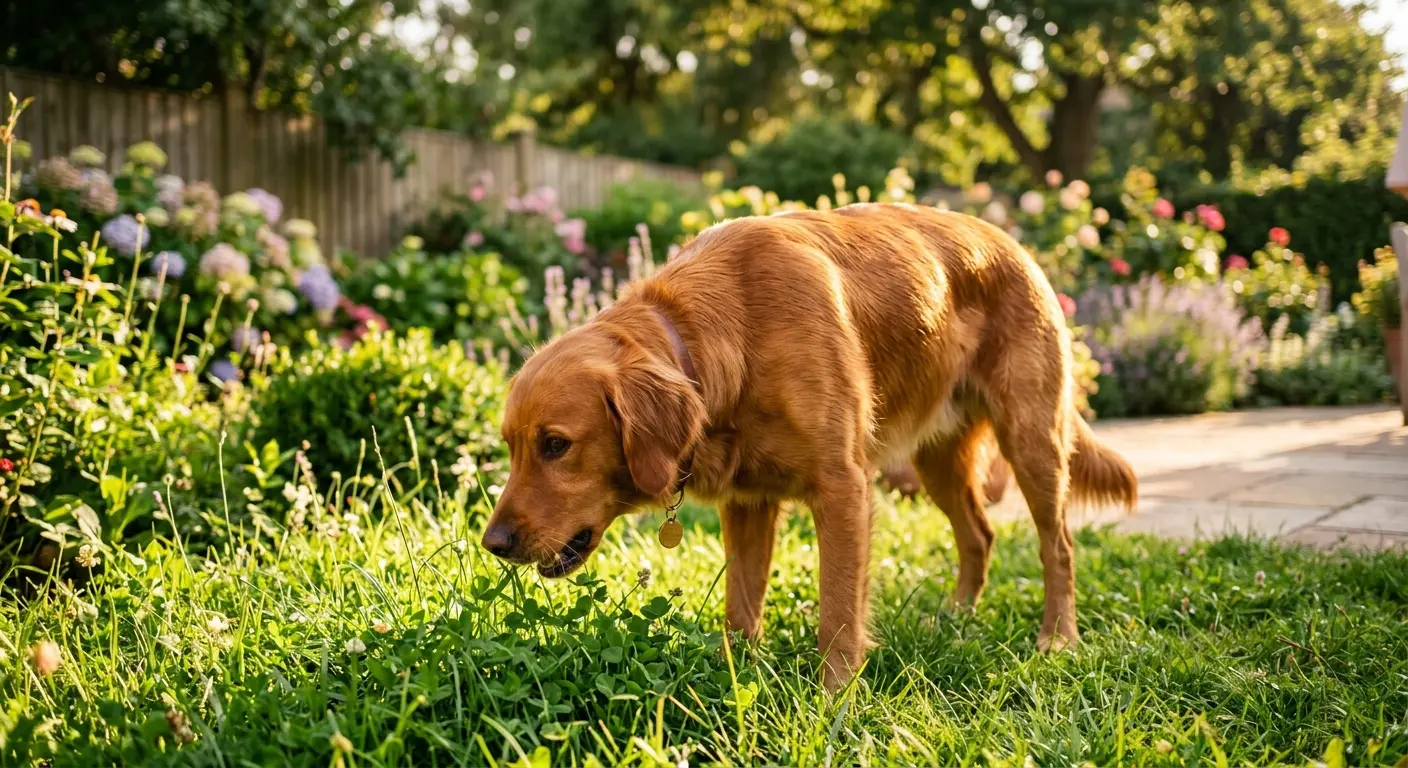
If your dog stops mid-walk to graze like a tiny cow, here’s the short answer: grass eating is normal, extremely common, and usually nothing to worry about. Most dogs do it at least occasionally, and in the vast majority of cases it isn’t a sign that anything is wrong.
That said, “usually harmless” isn’t “always harmless” — so let’s look at why dogs actually do it, and the few situations where it deserves attention.
”My dog eats grass because he’s sick” — probably not
The most popular explanation is that dogs eat grass to make themselves vomit when they feel unwell. It sounds sensible, but the evidence doesn’t back it up.
In a large survey of dog owners run by researchers at UC Davis, fewer than 1 in 10 dogs showed any sign of illness before eating grass, and fewer than 1 in 4 vomited afterwards. If grass were canine medicine, we’d expect those numbers to be far higher. Occasionally a dog with an upset stomach does gulp grass frantically and throw up — it happens — but for the everyday grazer, sickness is the exception, not the rule.
So why do dogs eat grass?
The honest answer is that there’s no single confirmed reason, but the likely explanations are reassuringly mundane:
- They like it. Grass has a texture and taste many dogs simply enjoy, especially fresh spring growth. Some dogs seek out particular patches like connoisseurs.
- It’s in their heritage. Dogs descend from opportunistic scavengers, and studies of wild canids show plant matter routinely turns up in their diets. A bit of grazing appears to be normal canine behavior, not a malfunction.
- A little extra fiber. Grass is roughage, and some dogs may nibble it the way we might reach for something crunchy and green.
- Boredom or habit. For under-stimulated dogs, grazing gives an otherwise dull yard time something to do — and if it once earned your attention, it may have been quietly rewarded, too.
Notice what’s not on the list: dominance, spite, or a dire nutritional emergency. If your dog eats a balanced diet and grazes calmly now and then, this is normal dog stuff.
Is eating grass dangerous?
The grass itself almost never is. The risks come from what’s on or around it:
- Lawn chemicals. Herbicides, pesticides, and some fertilizers can be toxic. Don’t let your dog graze on freshly treated lawns — including public parks and roadside verges where you can’t know what’s been sprayed.
- Toxic plants nearby. A dog nosing through a flower bed may sample more than grass. Lilies, foxglove, and daffodil or tulip bulbs are common garden dangers.
- Parasites. Grass in areas soiled by other animals can carry parasite eggs, and slugs and snails on grass can transmit lungworm in some regions. Routine parasite prevention covers most of this risk — ask your vet what’s appropriate where you live.
⚠️ Call your vet promptly if your dog eats grass frantically and vomits repeatedly, suddenly starts grazing much more than usual, seems lethargic or refuses food, has diarrhea alongside the grazing, or may have eaten treated grass or a toxic plant. Any of these turns “normal behavior” into “get it checked”.
Should you stop your dog from eating grass?
For a healthy dog grazing calmly on safe, untreated grass — you don’t have to. Trying to police every nibble usually creates more frustration than it prevents.
What’s worth doing instead:
- Keep your own lawn dog-safe. Skip chemical treatments where your dog plays, or keep them off treated areas for the time stated on the product label.
- Check the diet, just in case. If your dog grazes a lot, mention it at your next vet visit and make sure their food is complete and balanced. It’s rarely the cause, but it’s an easy box to tick.
- Add enrichment if boredom fits the picture. A dog who grazes out of idleness needs better things to do: sniff-heavy walks, food puzzles, chew toys, and a few minutes of training a day go a long way.
- Teach a solid “leave it”. For treated lawns, suspicious plants, or that one park where everything goes in the mouth, a cheerful, well-trained “leave it” is the kindest tool you have — no leash yanking required.
Build the skills that keep grazing safe — with Ruffy
A reliable “leave it” and a dog whose brain gets a real workout every day solve most grass-eating worries before they start. The Ruffy app teaches both — force-free, step by step, in just a few minutes a day, from impulse-control games to enrichment ideas that beat boredom at its source.
Download Ruffy free and turn “drop that!” panic into a calm, happy “leave it”. 🐾
Keep reading
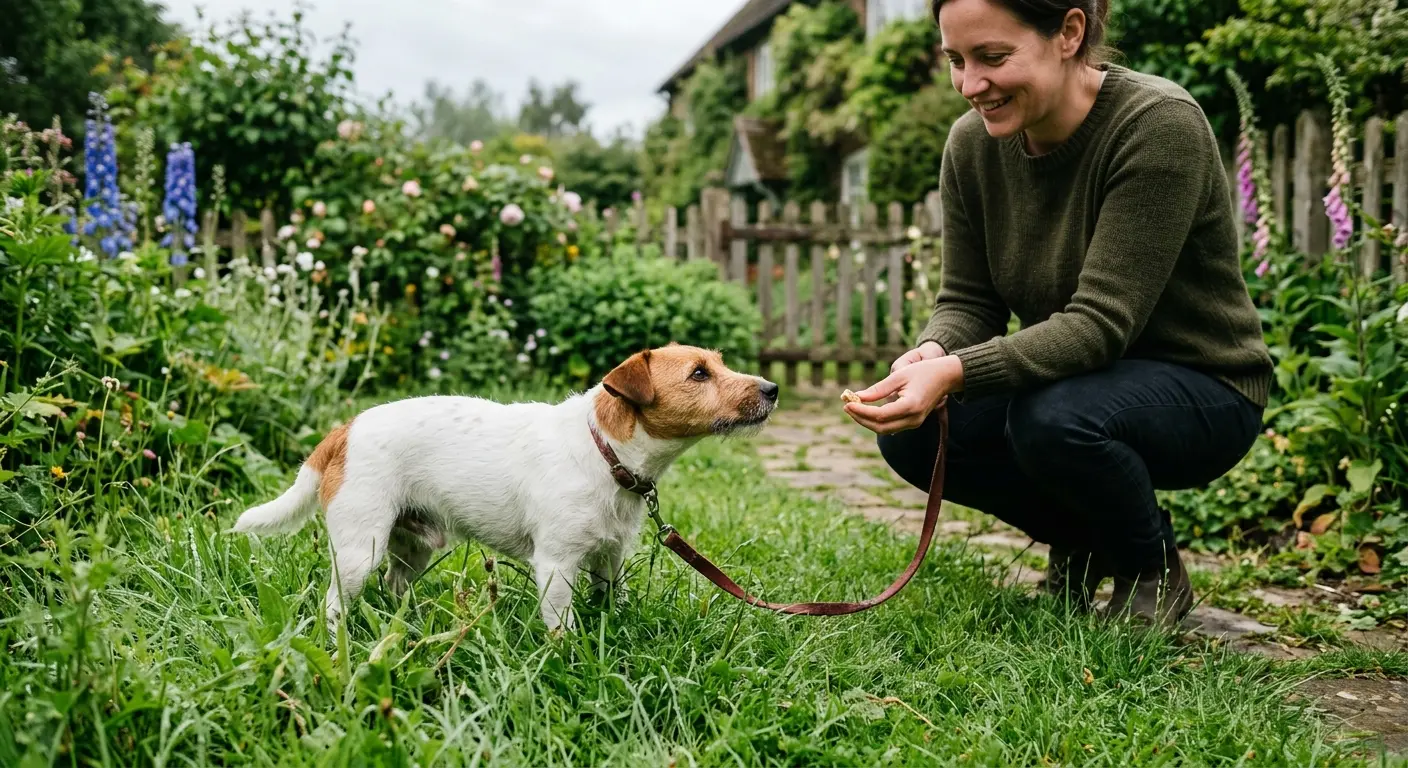
Why Does My Dog Eat Poop? (And How to Stop It, Kindly)
It's gross, but it's common and rarely a sign of something sinister. Here's what the science says about why dogs eat poop — their own, the cat's, or a horse's — plus the vet checks worth doing and the force-free way to stop it.
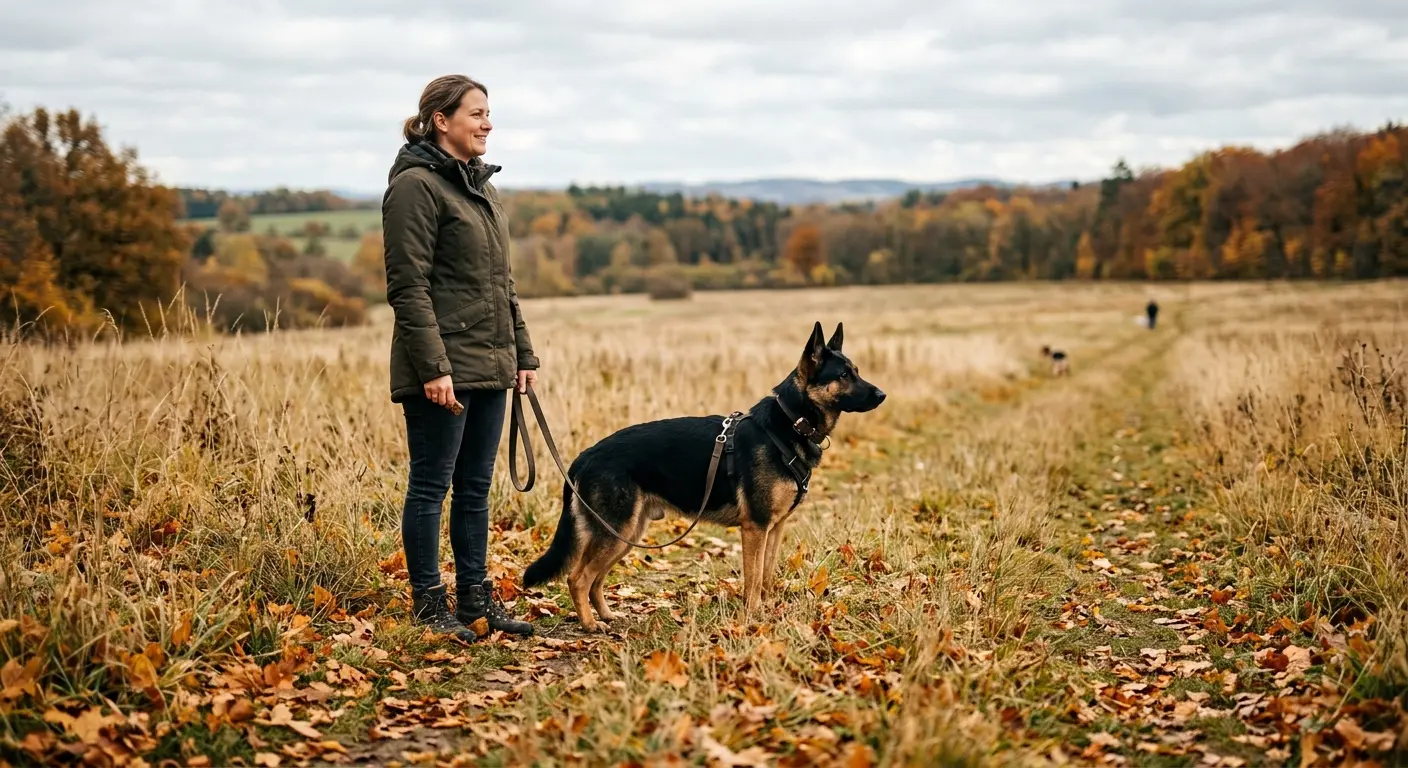
Why Does My Dog Bark and Lunge at Other Dogs on Walks?
Leash reactivity explained: why some dogs bark, lunge and pull at other dogs on lead, what makes it worse, and a calm, force-free plan to help them cope.
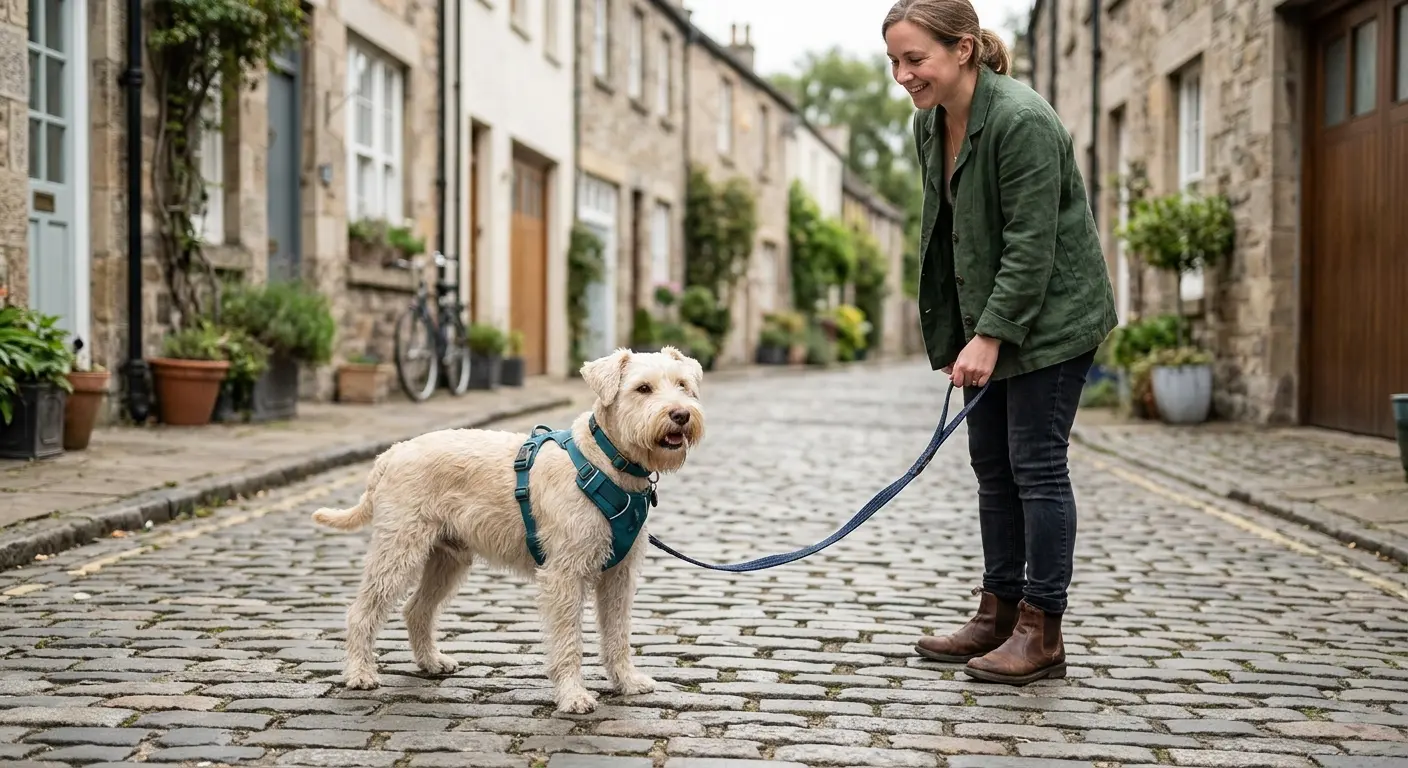
Dog Harness vs Collar: Which Is Better for Walks and Training?
Compare dog harnesses and collars for comfort, safety, loose-leash training and everyday use—and learn when using both makes sense.